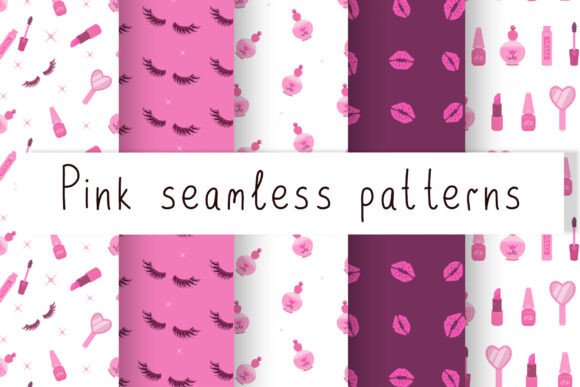
Integrating A Set of Seamless Pink Patterns into Modern Design Workflows
The visual language of design relies heavily on texture, repetition, and color harmony. Among the vast array of graphic assets available to creators, A Set of Seamless Pink Patterns stands out as a versatile and aesthetically pleasing resource. These patterns, characterized by their soft hues and recurring motifs, offer more than just decorative value; they provide a structural foundation for branding, packaging, and digital interfaces. This article explores the technical specifications, creative applications, and strategic advantages of utilizing high-quality seamless pink designs in both professional and personal projects.
Understanding the Technical Specifications
Before diving into creative applications, it is essential to understand what constitutes a high-quality seamless pattern file. The specific archive described includes five distinct EPS files and five corresponding JPG previews, ensuring that designers have both vector scalability and raster immediacy. The EPS 10 format is particularly significant because it guarantees compatibility with a wide range of Adobe Creative Cloud applications, including Illustrator, InDesign, and Photoshop. This format allows users to scale the patterns infinitely without losing resolution, which is crucial for large-format prints such as billboards or wall murals.
The accompanying JPG files are rendered at a resolution of 8333x8333 pixels at 300 PPI (pixels per inch). This high resolution ensures that when the patterns are used in digital contexts—such as website backgrounds, social media graphics, or mobile app interfaces—they remain crisp and clear on high-density displays like Retina screens. For educators and researchers studying digital asset management, these specifications represent a best-practice standard for distributing reusable graphic elements.
The Role of Vector vs. Raster Formats
Having access to both EPS and JPG formats provides a dual advantage. The vector EPS files allow for precise editing of individual elements within the pattern. A designer can change the color of a cosmetic accessory icon or adjust the spacing between dots without breaking the seamless tile. Conversely, the high-resolution JPGs serve as immediate placeholders or final outputs for web use, saving processing time during the initial stages of layout design.
Creative Applications Across Industries
The versatility of pink patterns extends far beyond simple decoration. Because pink carries diverse cultural connotations ranging from warmth and affection to modern minimalism, these patterns can be adapted to various industries. Below are several key sectors where these assets find practical utility.
Packaging and Product Design
In the beauty and cosmetics industry, visual appeal is paramount. A set of seamless patterns featuring cosmetic accessories—such as lipsticks, compacts, or brushes—can transform a plain box into an engaging unboxing experience. Brands often use these patterns to create a sense of luxury or playfulness. For instance, a skincare company might use a subtle, dot-based pink pattern to convey cleanliness and simplicity, while a candy brand might opt for a bolder, accessory-heavy design to suggest fun and indulgence. The seamless nature of the design ensures that the pattern wraps perfectly around cylindrical bottles or square boxes without awkward seams disrupting the visual flow.
Digital Interface and Web Design
Web developers and UI/UX designers frequently seek background textures that add depth without distracting from primary content. A Set of Seamless Pink Patterns offers an excellent solution for creating immersive landing pages or section dividers. By using the EPS files to customize the opacity and scale, designers can create layered effects that guide the user’s eye toward call-to-action buttons. Furthermore, the high resolution of the JPG files ensures that these backgrounds look sharp on all devices, reducing bounce rates caused by pixelated visuals.
Fashion and Textile Printing
While primarily digital assets, these patterns can also be bridged into physical products through direct-to-garment printing or fabric sublimation. Fashion designers can utilize the cosmetic-themed motifs to create limited-edition collections that tie into beauty campaigns. The ability to edit the vector files allows for rapid prototyping, enabling designers to test different colorways before committing to full-scale production runs.
Strategic Advantages of Using Pre-Made Patterns
For business owners and freelance creators, efficiency is a critical component of profitability. Utilizing pre-made seamless patterns offers several strategic benefits over creating designs from scratch.
- Time Efficiency: Creating a mathematically perfect seamless tile requires significant time and skill. By starting with a professionally crafted set, designers can focus on composition and branding rather than the technicalities of tiling algorithms.
- Cost-Effectiveness: Licensing a single archive containing ten high-resolution files is often more economical than commissioning custom illustrations for every project variation.
- Consistency: For brands requiring multiple touchpoints—from business cards to email headers—using a consistent pattern library ensures visual coherence across all marketing materials.
Considerations for Effective Implementation
While the assets themselves are high-quality, their effectiveness depends on how they are implemented. Designers must consider context, contrast, and audience perception when applying pink patterns.
Color Psychology and Tone
Pink is not a monolithic color. It ranges from pale blush to hot magenta. The specific shade chosen should align with the brand’s voice. Soft pinks often evoke calmness and femininity, making them suitable for wellness or baby products. Brighter pinks can signal energy and youth, appealing to a teenage demographic. When using A Set of Seamless Pink Patterns, it is advisable to adjust the hue and saturation to match the overall palette of the project, ensuring that the pattern complements rather than clashes with other elements.
Balance and Negative Space
One common mistake in pattern usage is overcrowding. A dense pattern with intricate cosmetic accessories can become visually noisy if not balanced with ample negative space. Designers should experiment with scaling the patterns up or down to find the "sweet spot" where the texture is visible but does not compete with text or primary imagery. Using the vector capabilities of the EPS files to reduce the density of certain elements can help achieve this balance.
Accessibility Standards
In the realm of digital accessibility, it is crucial to ensure that patterns do not interfere with readability. Screen readers rely on clear DOM structures, but visual accessibility is equally important. High-contrast text must be placed over patterned backgrounds to maintain legibility for users with visual impairments. Testing designs with grayscale filters can help determine if the pattern creates sufficient contrast or if it obscures important information.
Workflow Integration for Professionals
Integrating these patterns into a professional workflow involves a few key steps. First, import the EPS files into your preferred design software. Since the archive contains EPS 10 files, they should open seamlessly in most vector editors. Once imported, unlock the layers and explore the constituent parts. You may find that the "cosmetics" mentioned in the description include isolated icons that can be repurposed for other design elements, such as bullet points or dividers.
Next, create a master artboard or document where you test different scales and opacities. Use the 8333px JPGs as reference images to ensure that the scaled-down versions retain their detail. If you are working on a print project, remember to convert the final file to CMYK color mode to account for ink limitations, although the vibrant nature of pink usually reproduces well in print.
Trends in Pattern Usage
The trend towards personalized and experiential design has increased the demand for unique textures. Consumers are increasingly drawn to products that feel curated and thoughtful. By incorporating A Set of Seamless Pink Patterns, brands can signal attention to detail. Currently, there is a growing preference for "soft tech" aesthetics, where digital interfaces mimic tactile, organic textures. Pink patterns fit perfectly into this trend, bridging the gap between cold technology and warm human interaction.
Furthermore, the sustainability movement in design encourages the reuse of assets to reduce waste. Instead of discarding unused illustrations, integrating them into pattern sets maximizes their lifespan and utility. This approach aligns with sustainable practices by extending the value of each graphic element throughout its lifecycle.
Conclusion
The integration of A Set of Seamless Pink Patterns into design projects offers a blend of aesthetic appeal and technical reliability. Whether used for packaging, digital interfaces, or textile design, these patterns provide a robust foundation for creative expression. By understanding the technical specifications, considering the psychological impact of color, and adhering to best practices in implementation, professionals can leverage these assets to create compelling, cohesive, and commercially successful designs. The availability of both vector and high-resolution raster formats ensures that these patterns remain relevant across a wide spectrum of media and platforms, making them a valuable addition to any designer’s toolkit.